
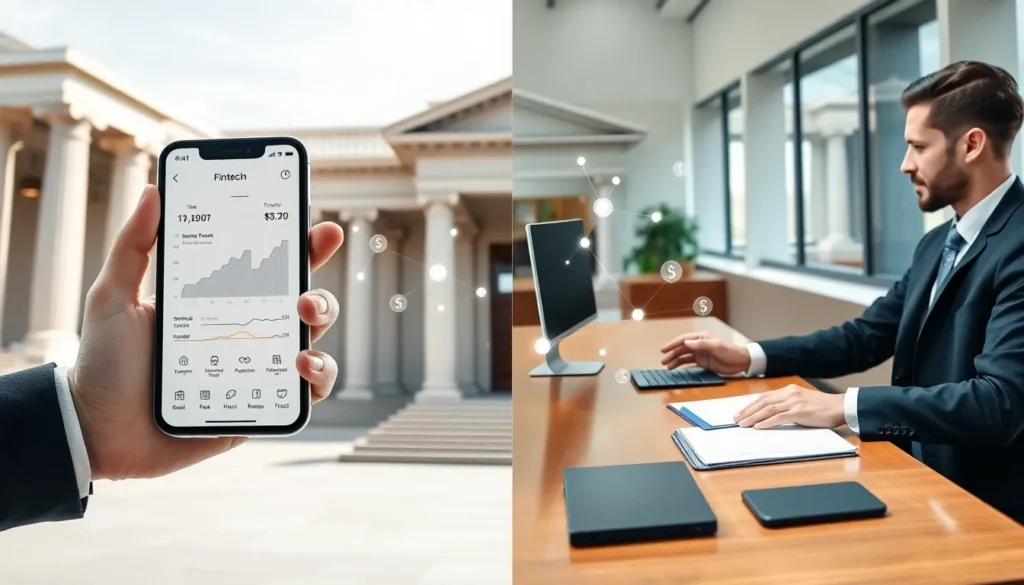

Fintech vs traditional banking represents one of the most significant shifts in how people manage money today. Over the past decade, financial technology companies have disrupted centuries-old banking models. They offer faster services, lower fees, and mobile-first experiences. Yet traditional banks still hold trillions in assets and serve billions of customers worldwide.
So which approach actually works better? The answer depends on what you need from your financial services. This guide breaks down the key differences between fintech and traditional banking, explores the advantages of each, and helps you decide which option fits your financial goals.
Table of Contents
ToggleKey Takeaways
- Fintech vs traditional banking comes down to your priorities: convenience and low fees versus comprehensive services and in-person support.
- Fintech companies offer faster account opening, quicker loan approvals, and lower fees due to their digital-first, branchless operations.
- Traditional banks provide FDIC-insured deposits, face-to-face customer service, and full-service offerings including mortgages and business loans.
- A hybrid approach—using traditional banks for core services and fintech apps for specific needs—lets you capture the best of both worlds.
- Younger consumers prefer fintech for better mobile experiences, while customers over 55 tend to favor banks with physical branches.
- Always verify FDIC insurance coverage when choosing a fintech company, as regulatory protections vary between providers.
What Is Fintech?
Fintech refers to companies that use technology to deliver financial services. These businesses operate primarily through apps, websites, and digital platforms. They handle everything from payments and lending to investing and insurance.
The fintech industry has grown rapidly since 2010. Companies like PayPal, Venmo, Robinhood, and SoFi have attracted millions of users. In 2023, the global fintech market reached a valuation of over $200 billion. Experts project it will exceed $500 billion by 2030.
Fintech companies typically focus on specific services rather than full-service banking. A payment app might excel at peer-to-peer transfers but not offer mortgages. A robo-advisor might manage investments but not provide checking accounts.
Key characteristics of fintech include:
- Digital-first operations – Most fintech companies have no physical branches
- Lower overhead costs – Savings often pass to customers through reduced fees
- Fast innovation cycles – New features launch quickly compared to traditional banks
- User-friendly interfaces – Apps designed for simplicity and speed
Fintech vs traditional banking comparisons often highlight speed as a major differentiator. Opening an account with a fintech company might take five minutes. Getting a loan decision could happen in hours rather than weeks.
How Traditional Banking Works
Traditional banks are licensed financial institutions that accept deposits, make loans, and provide various financial services. They operate under strict government regulations. Most have physical branch locations where customers can conduct business in person.
Banks like JPMorgan Chase, Bank of America, and Wells Fargo have existed for over a century. They hold federal charters and FDIC insurance protects customer deposits up to $250,000.
Traditional banks offer comprehensive financial services under one roof:
- Checking and savings accounts
- Credit cards and personal loans
- Mortgages and home equity lines
- Business banking and commercial lending
- Wealth management and investment services
The traditional banking model relies on relationships and trust built over time. Many customers stay with the same bank for decades. They value face-to-face interactions with bankers who know their financial history.
But, traditional banks move slower than fintech competitors. Regulations require extensive paperwork and approval processes. Technology updates often take years to carry out. And legacy systems can make simple tasks frustratingly slow.
When comparing fintech vs traditional banking, regulations play a huge role. Banks face stricter oversight, which provides consumer protections but also limits flexibility.
Core Differences Between Fintech and Traditional Banking
Understanding the fintech vs traditional banking debate requires examining several key factors.
Speed and Convenience
Fintech wins on speed. Account opening, fund transfers, and loan approvals happen faster through digital platforms. Traditional banks require more documentation and longer processing times.
A fintech lender might approve a personal loan in 24 hours. A traditional bank could take two weeks for the same decision.
Fees and Costs
Fintech companies generally charge lower fees. They don’t maintain expensive branch networks. Many offer free checking accounts with no minimum balance requirements.
Traditional banks often charge monthly maintenance fees, overdraft fees, and minimum balance penalties. But, some have introduced fee-free accounts to compete with fintech options.
Security and Regulation
Traditional banks operate under strict federal and state regulations. FDIC insurance guarantees deposit protection. Decades of regulatory oversight have established clear consumer protections.
Fintech companies face a patchwork of regulations. Some partner with banks to offer FDIC insurance. Others operate without the same safety nets. Customers should verify insurance coverage before depositing funds.
Customer Service
Traditional banks provide in-person support at branches. Customers can speak with bankers face-to-face about complex issues like mortgages or estate planning.
Fintech companies rely on chatbots, email, and phone support. Quality varies widely. Some offer excellent digital support, while others leave customers frustrated.
Product Range
Traditional banks offer comprehensive services. One institution can handle checking, savings, loans, investments, and insurance.
Fintech companies typically specialize. You might need multiple apps to replace what one traditional bank provides.
Pros and Cons of Each Approach
Fintech Advantages
- Lower fees – Many services cost less or nothing
- Better technology – Modern apps with intuitive design
- Faster service – Quick approvals and instant transfers
- Higher interest rates – Online savings accounts often pay more
- Accessibility – Bank from anywhere with a smartphone
Fintech Disadvantages
- Limited services – May need multiple apps for different needs
- Less personal support – No branch visits or relationship bankers
- Regulatory uncertainty – Protections vary by company
- Newer companies – Less track record and stability
Traditional Banking Advantages
- Full-service offerings – Everything under one roof
- FDIC insurance – Guaranteed deposit protection
- In-person support – Face-to-face help with complex issues
- Established trust – Decades or centuries of operation
- Cash handling – Easy deposits and withdrawals at branches
Traditional Banking Disadvantages
- Higher fees – Monthly charges and various penalties
- Slower processes – More paperwork and longer wait times
- Lower interest rates – Savings accounts often pay less
- Outdated technology – Apps can feel clunky compared to fintech
The fintech vs traditional banking choice often comes down to priorities. Do you value convenience and low costs? Or do you prefer comprehensive services and face-to-face support?
Which Option Is Right for You?
The fintech vs traditional banking decision depends on your specific needs.
Choose fintech if you:
- Prefer managing money through apps
- Want to minimize fees
- Don’t need in-person banking services
- Feel comfortable with digital-only support
- Seek higher interest rates on savings
Choose traditional banking if you:
- Value face-to-face relationships with bankers
- Need complex services like mortgages or business loans
- Want all financial services from one institution
- Prefer guaranteed FDIC protection
- Handle cash frequently
Consider a hybrid approach:
Many people use both. They keep a traditional bank account for direct deposit and cash access. Then they use fintech apps for specific needs, a high-yield savings account here, a budgeting app there.
This combination captures benefits from both worlds. You get the security and services of traditional banking plus the innovation and savings of fintech.
Younger consumers often lean toward fintech. A 2024 survey found that 73% of millennials would switch banks for a better mobile experience. But the same survey showed that 68% of customers over 55 prefer banks with physical branches.
Your comfort level with technology matters too. If troubleshooting app issues frustrates you, traditional banking might provide more peace of mind.